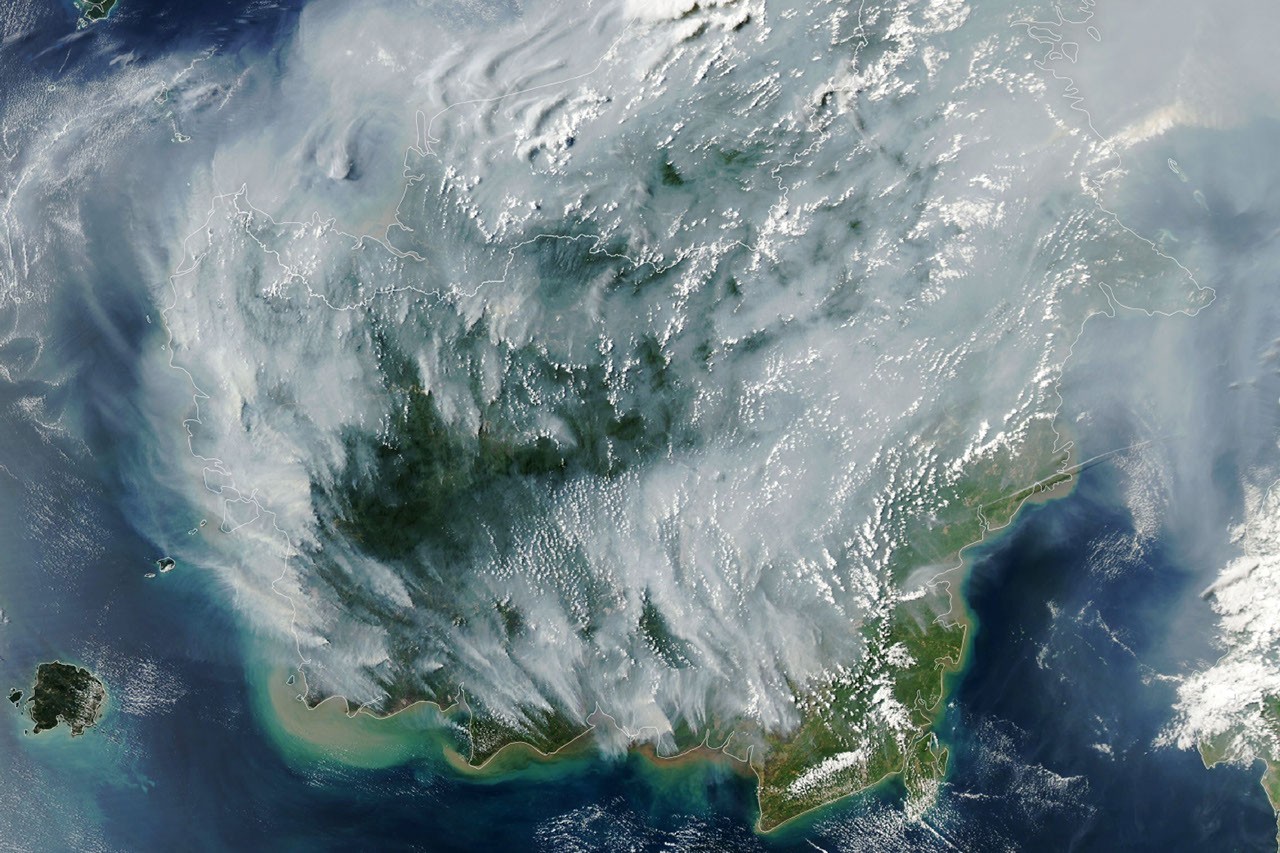
Tropical peatland fires are currently burning across Indonesia, with activity sharply increasing and mirroring levels seen during the severe 2015 fire season. These fires, fueled by a strong El Niño and drought conditions, are particularly difficult to extinguish due to their underground nature and release significant pollutants.
NASA’s Aqua satellite captured images on September 1, 2026, showing numerous “fire detections” – pixels indicating thermal anomalies indicative of fire. Indonesia, home to 36 percent of the world’s tropical peatlands, experiences recurring fire challenges, especially when drought conditions parch the landscape. The current fire season is still early, but Robert Field, a Columbia University researcher who developed the Global Fire Weather Database, notes that fire activity is tracking sharply upward, similar to 2015.
According to Field, “Indonesia is only about three weeks into its fire season, but we're seeing fire activity track sharply upward, similar to 2015.” He attributes the increased burning to the strong El Niño, which is exacerbating dry conditions. In 2015, fires released 1.75 billion tons of greenhouse gas equivalents – more than Japan emits in a year. As of September 2, 2026, the current fires have released roughly 10 percent of that amount, despite having burned for only about a month.
The Indonesian meteorological agency reported that approximately 90 percent of the country received little to no rainfall in early August, creating ideal conditions for peat fires to spread. Unlike surface fires, peat fires burn underground and are notoriously difficult to stop. Field explains, “Surface fires are less of a concern, but when fires get underground, they just won't stop. They'll keep burning until the rains come.” Peat fires generate significantly more pollutants than other tropical forest fires, including three times more fine particulate matter, five times more sulfur dioxide, three times more organic carbon, and two times more methane and carbon monoxide.
Originale Berichterstattung lesen
💬 Kommentare
📜 Kommentar-Richtlinie