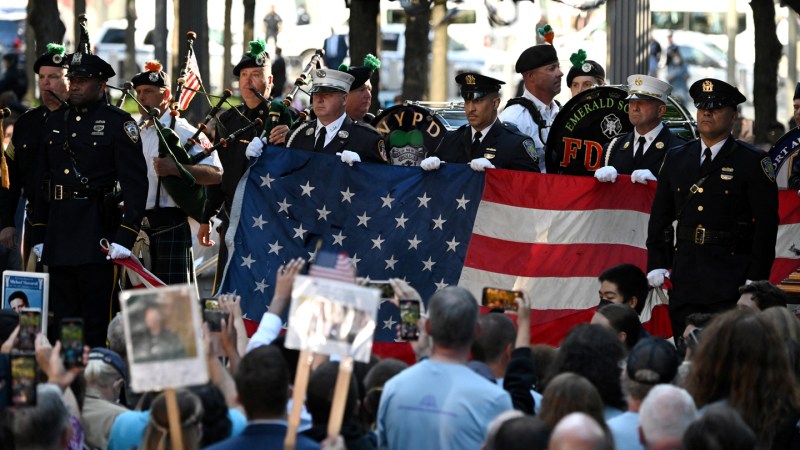
Twenty-five years after the September 11th attacks, the health consequences for those directly affected and those who responded continue to emerge and evolve. The World Trade Center Health Program provides ongoing care and monitoring for over 154,000 individuals impacted by the disasters.
Denise Harrison, working at Bellevue Hospital in New York City on September 11, 2001, recalls the anticipation of a massive influx of patients that never fully materialized. “We had more doctors there than patients,” Harrison says. “We knew why. That was saddening.” While thousands died in the initial attacks, hundreds of thousands more—responders, recovery workers, and those living near ground zero—continue to experience health issues.
The collapse of the twin towers released dust and debris, polluting the air and contributing to respiratory diseases, cancers, and mental health disorders. New health challenges are now arising as responders age and develop conditions that complicate existing 9/11-related illnesses. Retirement and anniversaries can exacerbate mental health struggles. Jodi Streich, the mental health director at the World Trade Center Health Program at Rutgers University in Piscataway, N.J., notes that news coverage surrounding the anniversary “will definitely reactivate the emotions, the memories. And it doesn’t all go away on September 12,” Streich says. “It stays.”
The WTC Health Program, created to screen, monitor, treat, and research health conditions related to the attacks, currently serves people who worked in rescue, response, recovery, and cleanup at the disaster sites in New York City, Arlington, Va., and near Shanksville, Pa., as well as those who lived, worked, or attended school near the World Trade Center in New York City. As of summer 2026, over 154,000 people are enrolled in the program, which is funded through 2090.
According to Harrison, now medical director of the WTC Health Program at New York University, “Most disasters don’t end when the event ends.” She describes the program as a “safety net” where patients find understanding from medical providers familiar with their experiences. The program offers initial evaluations, yearly check-ups, and specialized care at no cost to those who qualify, through clinical centers in New York and New Jersey and a national network of doctors. The program officially began in 2011 after Congress dedicated long-term funding to 9/11 health care.
Originale Berichterstattung lesen
💬 Kommentare
📜 Kommentar-Richtlinie