Trump Announces Plan to Purchase Russian Diesel Despite Legal Concerns
AI-синтезирано · Пристрастието премахнато · Само факти
3 източника: 1 ляво · 0 център · 2 дясно
Facts are sacred. Opinion is labelled.
Image: Nytimes
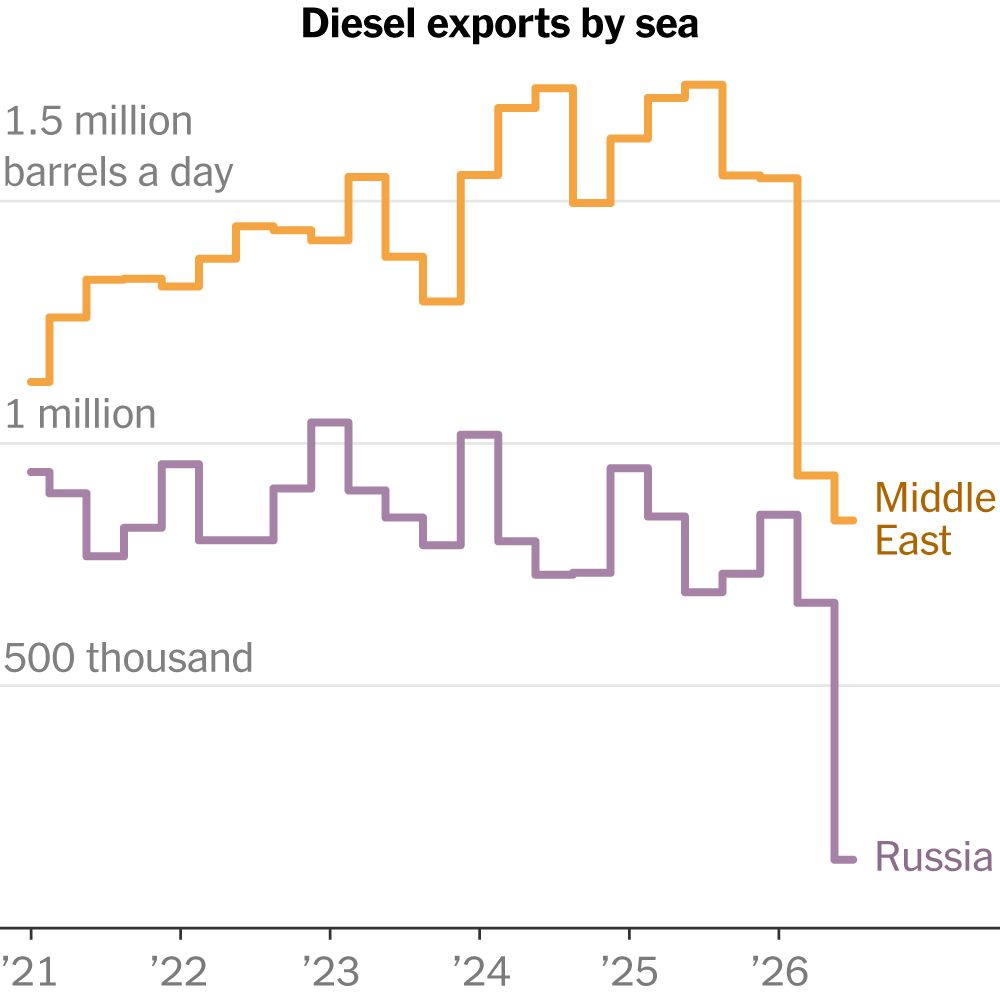
President Donald Trump has announced a deal to purchase Russian diesel fuel, a move that is likely to have minimal impact on US prices but is drawing bipartisan legal scrutiny. The agreement comes as diesel prices have risen roughly 50 percent since the start of the war in Iran, exacerbated by Ukrainian attacks on Russian refineries and broader global market factors. While Trump aims to lower fuel costs ahead of the midterm elections, legal experts assert the deal violates the Ending Importation of Russian Oil Act, passed in 2022, which bans Russian energy products unless Russia withdraws from Ukraine and Congress approves a lifting of the ban, a process not followed in this case. The Lindsey O. Graham Sanctioning Russia and Iran Act also applies.
Reporting suggests investors with ties to the Trump administration are likely to benefit from the purchases. However, analysts at the University of Cologne contend that the volume of Russian diesel planned is insufficient to significantly affect US prices, suggesting the move is primarily symbolic. The Treasury Department has announced a temporary general license to allow the supply of Russian diesel to the global market.
Kyiv and European officials view the deal as a betrayal, fearing Russia will use the revenue to finance its war in Ukraine. Security experts note that while the agreement may not provide Russia with significant military benefits, it signals a prioritization of domestic US politics and relations with Russia over support for Ukraine. There are concerns the US may suspend intelligence sharing with Ukraine. The Biden administration temporarily suspended sanctions on Russian oil exports in March, but Russia has not demonstrated a military strategy for further advances in the Donbas despite the revenue.
Where they differ
- The New York Times and Deutsche Welle emphasize the potential impact on Ukraine, framing the deal as a betrayal of US support. Free Press and Reason focus more on the domestic political motivations behind the deal and the legal challenges it faces.
- Reason highlights the potential violation of federal law as the central issue, while the New York Times frames it as unlikely to lower fuel costs.
- Free Press provides historical context on Trump’s previous energy promises and the factors driving up diesel prices, a detail less prominent in other reports.
What is not yet known
- The exact terms of the agreement, including the volume of diesel to be purchased, the price per barrel, and whether private companies or taxpayers will fund the purchases, remain unclear.
- The extent to which the White House will follow the legal process required to lift the ban on Russian oil imports, including notifying Congress and waiting 90 days, is uncertain.
Background
- The Ending Importation of Russian Oil Act was passed in 2022, prohibiting Russian energy product imports unless Russia withdraws from Ukraine and Congress approves lifting the ban [Fact Refinery, 2026-10-14].
- Diesel prices have increased approximately 50 percent since the start of the war in Iran, with Ukrainian attacks on Russian refineries and global market factors contributing to the rise [Fact Refinery, 2026-10-14].
- Prior to this agreement, the Biden administration temporarily suspended sanctions on Russian oil exports in March, but Russia has not demonstrated a military strategy for further advances in the Donbas [Fact Refinery, 2026-10-14].
- Ukraine has expressed concern about potential cuts to US intelligence sharing, particularly regarding advance warning of Russian missile strikes, and disruptions to Starlink service impacting its military operations [Fact Refinery, 2026-10-14; 2026-10-13].
Our reading
Our reading is that this deal, while potentially having limited economic impact, is primarily a political maneuver by President Trump ahead of the midterm elections. The reports suggest a willingness to prioritize domestic political considerations and potentially strained relations with Russia over maintaining a unified front of support for Ukraine. The legal challenges and international condemnation further indicate the symbolic, rather than substantive, nature of this agreement.
What to watch
- Whether the Treasury Department expands the temporary general license to allow for significantly increased Russian diesel imports [Treasury Department website].
- The response from Congress, specifically whether they initiate proceedings to investigate potential violations of the Ending Importation of Russian Oil Act [Congressional records].
- Any changes in the level of intelligence sharing between the US and Ukraine, and whether Ukrainian military capabilities are demonstrably affected [Statements from US and Ukrainian officials].
💬 Коментари
📜 Правила за коментари