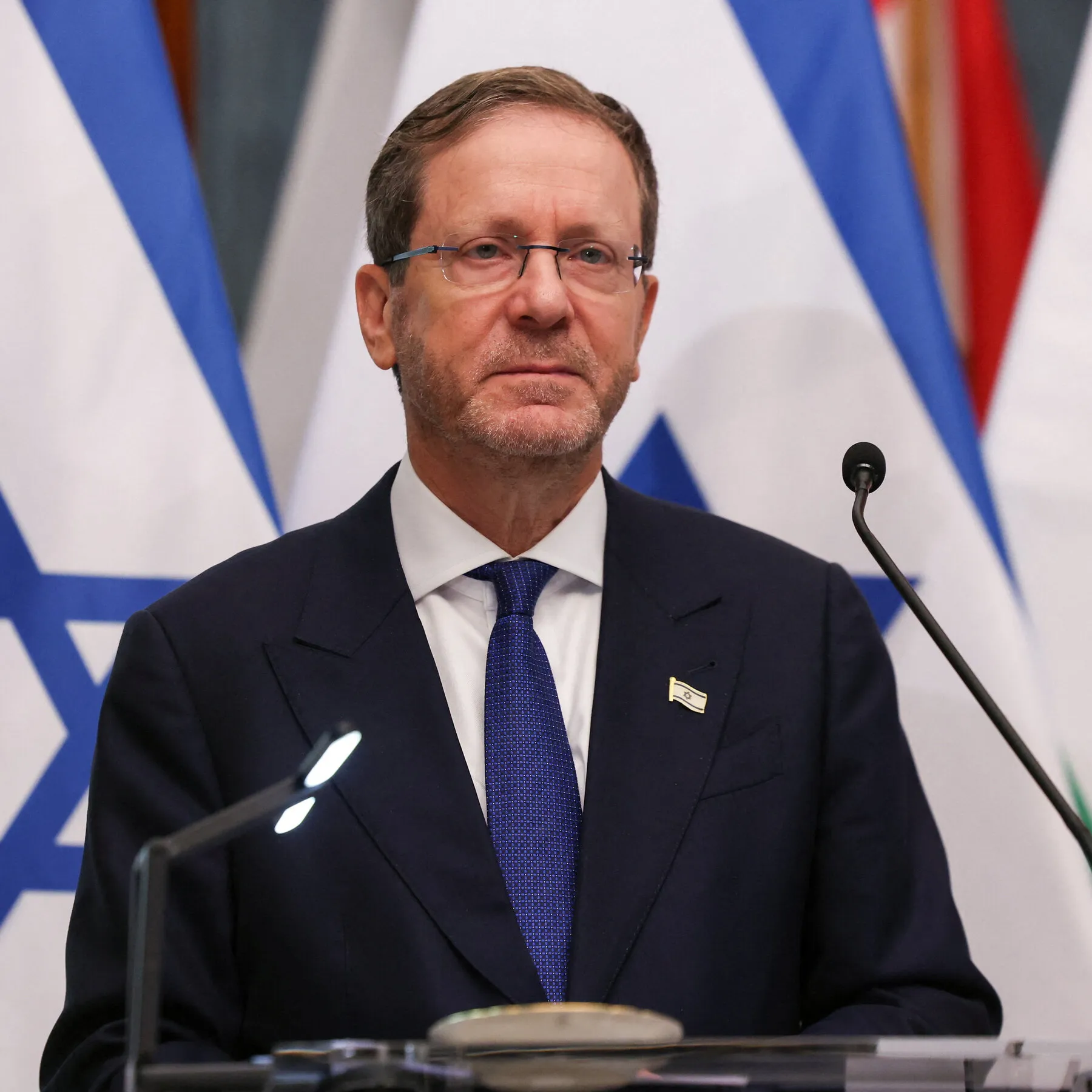
Israel’s President Isaac Herzog has begun a series of consultations with political party representatives after last week’s election resulted in a parliamentary deadlock, with neither the right-wing bloc led by Benjamin Netanyahu nor his rival Gadi Eisenkot securing a majority of the 120-seat Knesset. Herzog is tasked with nominating a member of parliament to attempt to form a new government, a role that carries significant weight despite the largely ceremonial nature of the Israeli presidency. He urged lawmakers to approach the process with “an open mind” and seek “creative solutions” to avoid another election, signaling a potential push for a unity government, a departure from his previous stance in 2015 when he rejected such an arrangement. The Central Elections Committee confirmed the results, dismissing claims of irregularities raised by Netanyahu’s camp, though the Shin Bet security service is investigating allegations of foreign interference. Herzog’s family has a long history of political involvement in Israel, with his father and grandfather both serving as presidents, and his uncle as a prominent foreign minister.
The current situation presents a delicate challenge for Herzog, who previously expressed opposition to governing with Netanyahu. Nachman Shai, a former Labor Party minister, noted Herzog “expected to be prime minister” but suffered a “stinging disappointment” when he lost to Netanyahu in 2015. The election saw a surge in turnout among Arab voters, resulting in 19 seats held by two Arab-led alliances, potentially making them kingmakers, though most Jewish parties had pledged not to collaborate with them. The president has 28 days to task a member of parliament with forming a government, with a possible 14-day extension. Justice Noam Sohlberg, chairman of the Central Elections Committee, stressed the importance of accepting the election results to maintain a peaceful transfer of power.
Our reading is that President Herzog finds himself in a difficult position, needing to navigate a deeply divided Knesset and his own previously stated opposition to governing with Netanyahu. The article suggests a potential shift in his approach, indicated by his call for “creative solutions” and a unity government, despite having rejected such an arrangement in the past. The investigation into foreign interference adds another layer of complexity, while the surge in Arab voter turnout introduces a new dynamic to the coalition-building process.
Прочетете оригиналното отразяване
💬 Коментари
📜 Правила за коментари