Fire Engulfs Hitler's Eagle's Nest Retreat, Suspect Arrested
AI-синтезирано · Пристрастието премахнато · Само факти
3 източника: 1 ляво · 0 център · 2 дясно
Facts are sacred. Opinion is labelled.
Image: Bbc Us
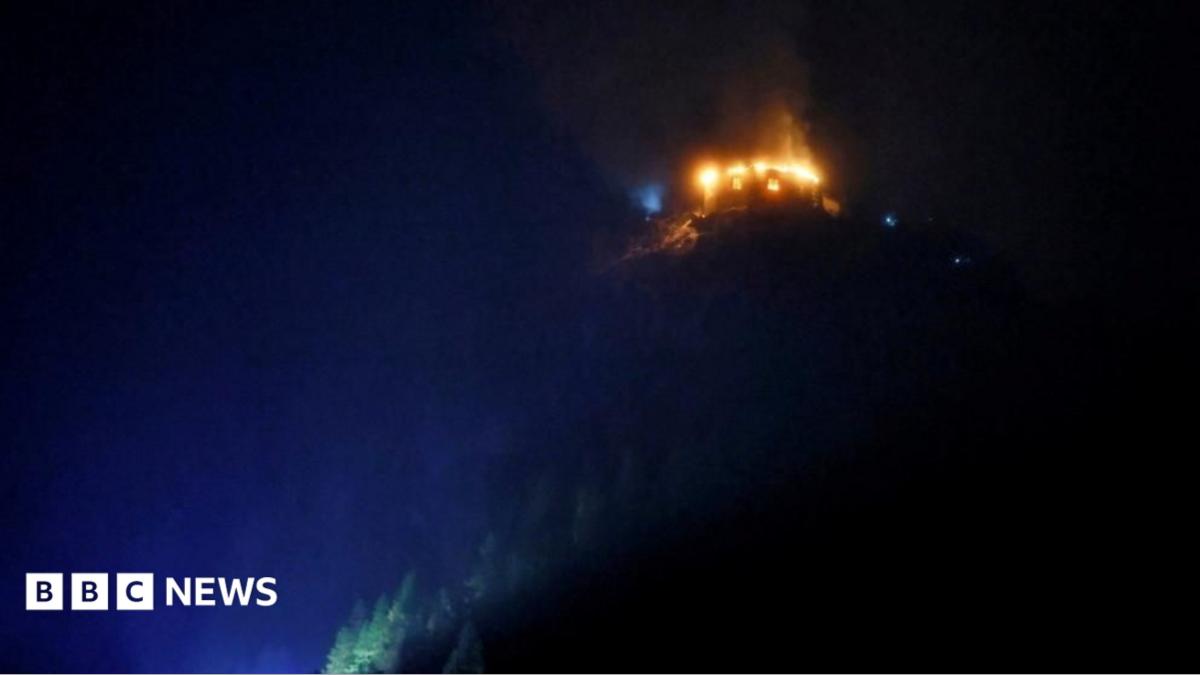
A fire broke out Friday evening at the Kehlsteinhaus, known as the Eagle's Nest, a historic mountaintop retreat used by Adolf Hitler and Nazi officials. German police have arrested a suspect and launched a criminal investigation into the cause of the blaze. Approximately 200 emergency personnel responded to the fire, which was difficult to extinguish due to the building’s remote location at 1,834 meters above sea level. The Kehlsteinhaus, completed in 1938, served as a guest house for Nazi officials and, though infrequently visited by Hitler himself, was used for planning meetings, including those related to the 1941 invasion of the USSR. Unlike many structures in the surrounding area, the Eagle’s Nest survived Allied bombing during World War II and has since become a popular tourist destination and a historical monument. Authorities reported no injuries as a result of the fire, but the extent of the damage remains unclear. The building is accessible only by a brass elevator or specialized mountain roads, complicating firefighting efforts.
While the structure is a popular tourist attraction and houses a mountain inn, it is also described as a reminder of the Nazi dictatorship. The fire prompted a large emergency response, with firefighters struggling to reach the site. The incident remains under criminal probe, and the investigation is ongoing.
Where they differ
- The New York Post and Upday News Germany (as reported by the New York Post) emphasized the logistical difficulties of fighting the fire due to the remote location and limited access, while other sources focused more broadly on the emergency response.
- GB News led with the arrest of a suspect, while other sources reported the arrest further into their coverage.
- DW highlighted that the Kehlsteinhaus was where Hitler partially wrote 'Mein Kampf', a detail not present in other reports.
- The Straits Times noted the building is now owned by the state of Bavaria, a detail not mentioned elsewhere.
What is not yet known
- The extent of the damage to the Kehlsteinhaus remains unconfirmed.
- The motive for the fire is currently unknown.
- The identity of the arrested suspect has not been released.
Background
- The Kehlsteinhaus was completed in 1938 and functioned as a guest house for Nazi officials [Fact Refinery, current article]. It was the site of planning meetings, including those concerning the 1941 invasion of the USSR [Fact Refinery, current article]. The structure survived Allied bombing during World War II, unlike many buildings in the area [Fact Refinery, current article]. The building is currently owned by the state of Bavaria [The Straits Times, via Fact Refinery, current article].
Our reading
Our reading is that the fire at the Eagle’s Nest, while prompting a significant emergency response, is notable not just for the logistical challenges of fighting it, but for the symbolic weight of the location itself. The differing emphases in reporting, from logistical difficulties to the suspect’s arrest, suggest a struggle to frame the incident, given its historical context as a site associated with the Nazi regime. The lack of immediate information regarding the suspect’s identity or motive further complicates initial interpretation.
What to watch
- Confirmation of the extent of the damage to the Kehlsteinhaus will indicate the severity of the incident [official Bavarian government statements]. Release of details regarding the arrested suspect and their potential motive will be crucial to understanding whether the fire was accidental or intentional [German police press releases]. Any statements from Bavarian authorities regarding the future of the site as a historical monument and tourist attraction would signal their approach to preserving or recontextualizing this sensitive location [Bavarian Ministry of Science and Arts].
💬 Коментари
📜 Правила за коментари