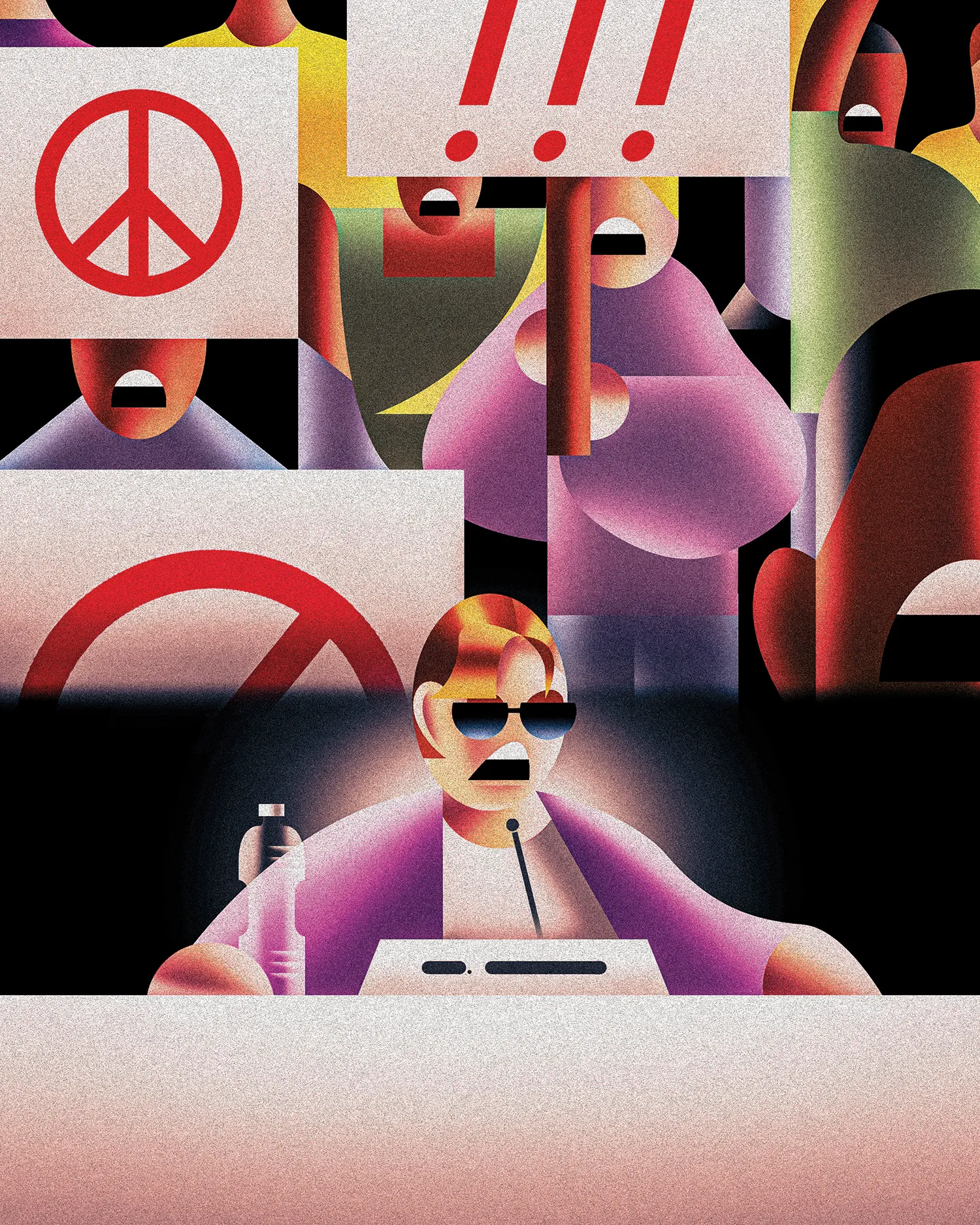
The Berlin and Cannes film festivals experienced political disruption, and the Venice Film Festival is bracing for similar challenges. At the Berlin Film Festival, jury president Wim Wenders faced criticism for suggesting film directors “stay out of politics” while addressing questions about Israel and Palestine. Author Arundhati Roy withdrew from the festival in protest, and artistic director Tricia Tuttle issued a statement addressing the resulting media storm.
In Cannes, a petition signed by thousands of film professionals – including Javier Bardem, Mark Ruffalo, and Ken Loach – condemned the “increasing ideological influence” of Vincent Bolloré, the majority shareholder of Canal+ and France’s largest film investor. Attendees reportedly booed the Canal+ and StudioCanal logos during film credits. A separate debate centered on the use of artificial intelligence in filmmaking, with juror Demi Moore stating, “AI is here, and so to fight it is to fight something that is a battle that we will lose.”
The Venice Biennale art exhibition, run by the Venice Biennale Foundation which also runs the film festival, was criticized in April for allowing Russia and Israel to host exhibits. This led to the European Commission withdrawing $2.3 million in funding, asserting that European taxpayer money “should safeguard democratic values.” Biennale president Pietrangelo Buttafuoco responded by accusing Brussels of hypocrisy, pointing out that $5.9 billion in liquefied natural gas contracts were awarded to Vladimir Putin in six months. Buttafuoco maintains the Biennale is a “space of cultural coexistence” free from censorship. Venice Film Festival artistic director Alberto Barbera stated that any Russian film submissions would be judged solely on their quality.
Прочетете оригиналното отразяване
💬 Коментари
📜 Правила за коментари