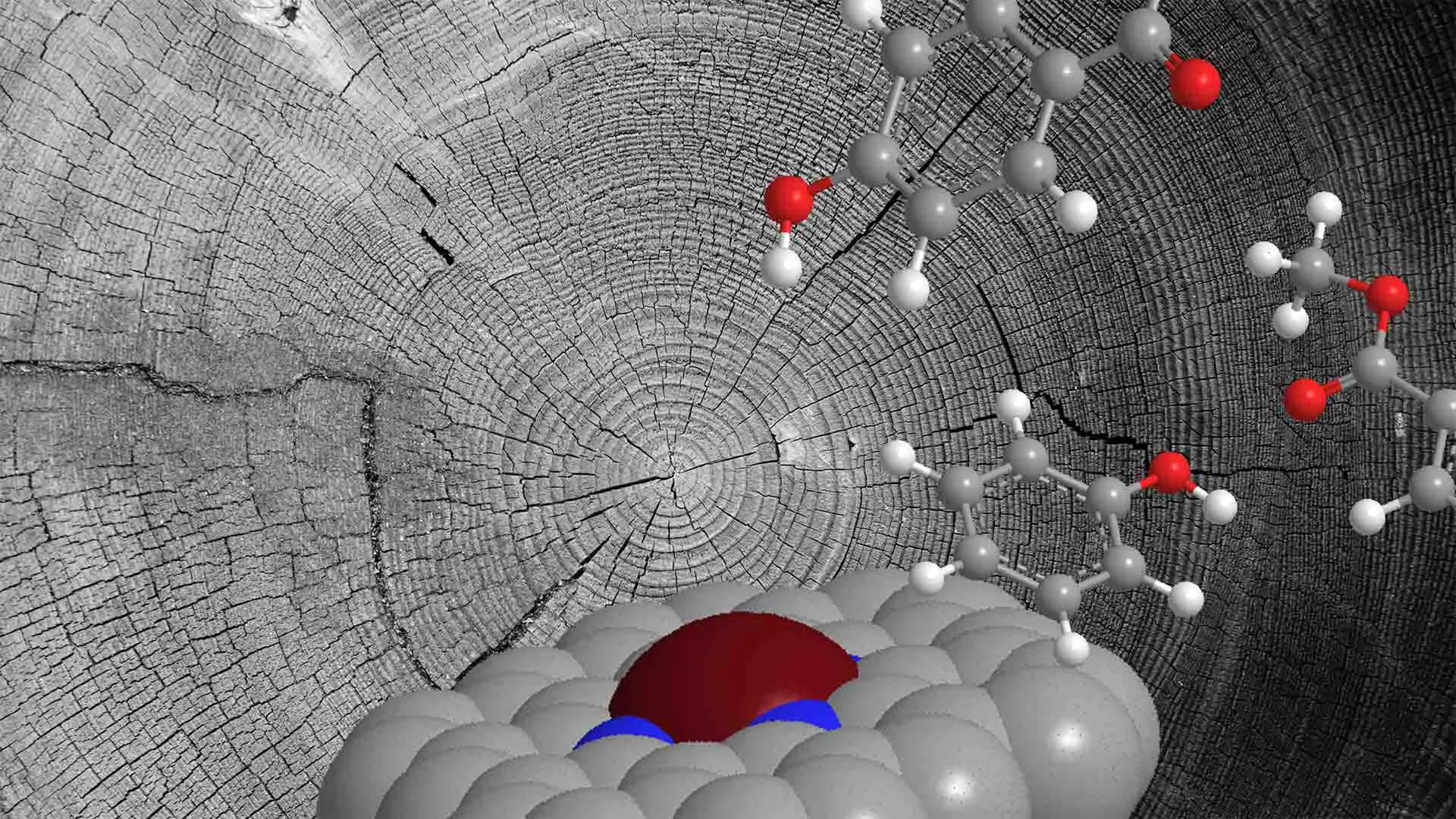
Scientists have developed a new catalyst that efficiently breaks down lignin, a component of plant waste, into valuable chemicals. The discovery, made by revealing how the catalyst functions at the atomic level, could enable the conversion of forestry and agricultural waste into renewable materials for fuels, plastics, and more.
Researchers created a highly efficient catalyst to address the challenge of processing lignin, a complex polymer found in plant cell walls. Lignin is notoriously difficult to break down, representing a significant obstacle in utilizing plant waste effectively. The new catalyst achieves this breakdown under relatively mild conditions, a key advancement over previous methods.
The breakthrough lies in understanding *how* the catalyst works at the atomic level. By detailing the catalytic process, scientists hope to unlock the potential of forestry and agricultural waste as renewable resources. This could provide sustainable building blocks for a range of products, including fuels, plastics, and other materials. The research indicates a pathway to transform what is currently considered waste into valuable commodities, contributing to a more circular economy.
Прочетете оригиналното отразяване
💬 Коментари
📜 Правила за коментари